Skip to content

Repeaters & System Infrastructure

Repeaters, trunking base stations and IP-linked systems that extend coverage across buildings and campuses, with dispatch and recording.

7 models

Reviewed by Ellen Zhou

A 1U multi-mode repeater that carries PDT, DMR, NXDN and analog traffic on one chassis, with 5-50 W adjustable output and IP interconnection for wide-area voice and data networks.

Modes
PDT / DMR / NXDN / Analog
Output power
5-50 W
Form factor
1U rack
Networking
IP interconnection
View details

A 1U PDT digital repeater with the power adapter built in, automatic DC/AC power switching, IP interconnection and integrated routing plus SIP telephony gateway — so dispatch consoles, SIP phones and VoIP applications join the radio network without extra gateway hardware.

Standard
PDT digital
Form factor
1U, built-in power adapter
Power input
DC + AC, automatic switching
Gateway
Integrated routing and SIP telephony gateway
View details

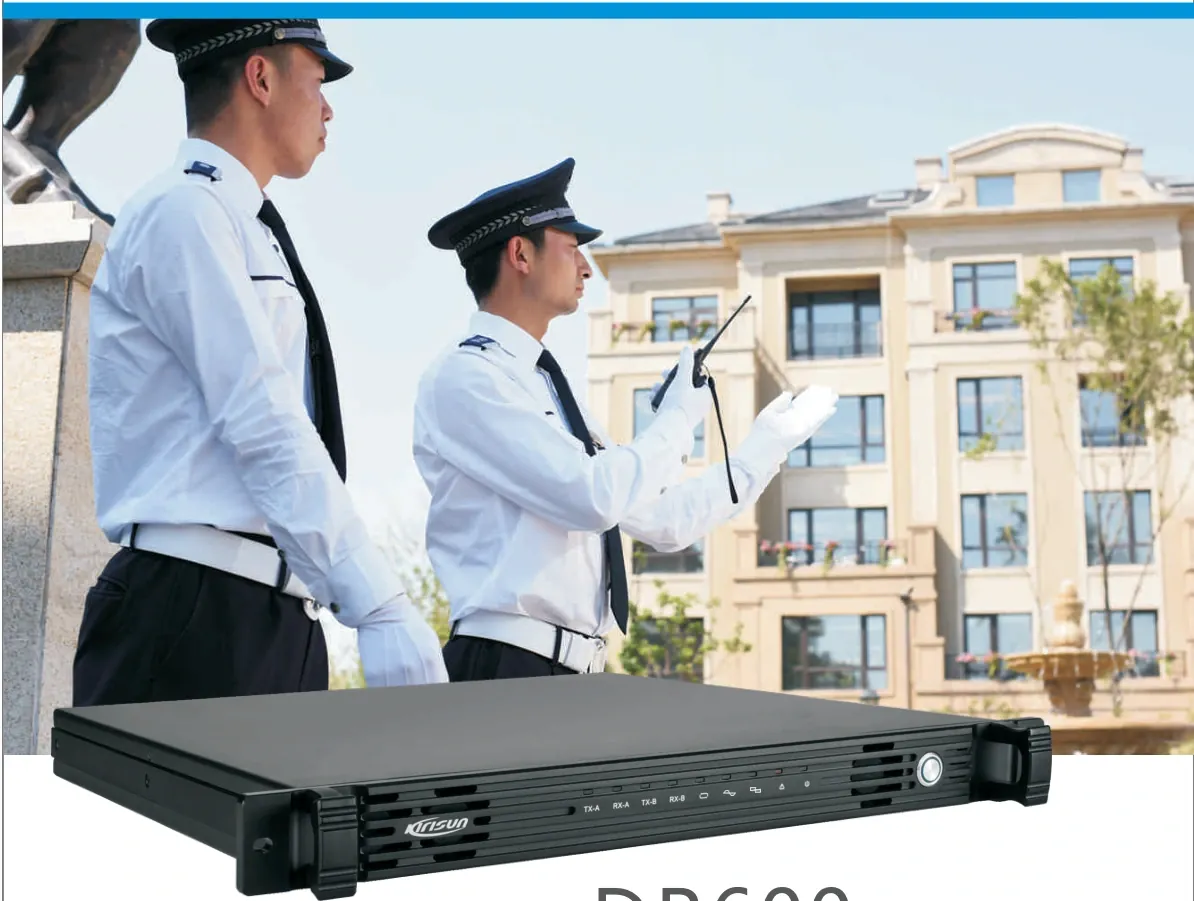
A DMR/PDT compliant professional repeater with digital, analog and mixed modes, adaptive digital/analog forwarding, 64 channels, 45 W VHF and 40 W UHF output, DC or AC power, and open interfaces for third-party dispatch integration.

Standard
DMR / PDT
Output power
45 W (VHF) / 40 W (UHF)
Channel capacity
64
Working mode
Digital / analog / mixed
View details

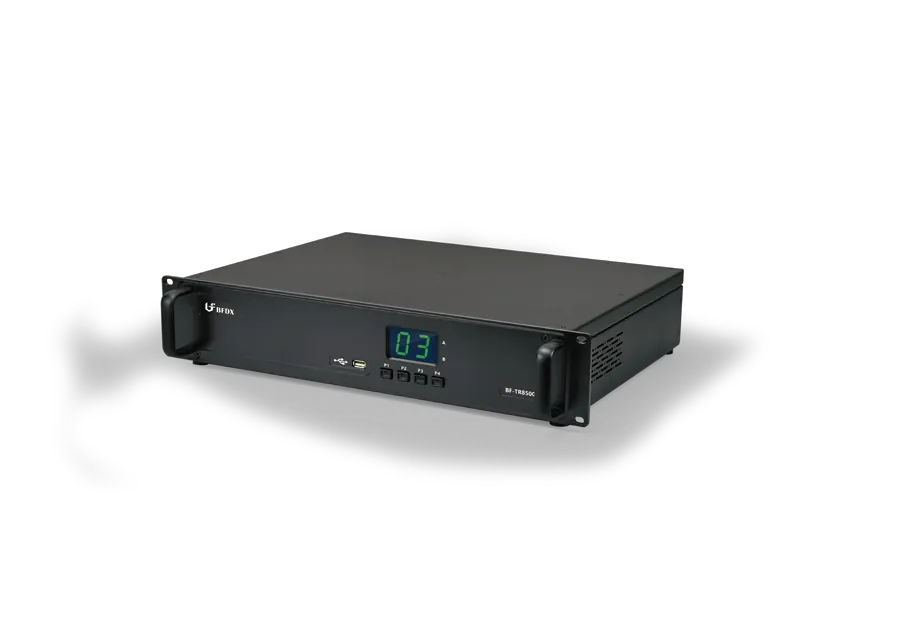
A cost-effective digital channel unit in a standard 19-inch 2U rack chassis, with 50 W output, a built-in power module, emergency power float charging, active cooling, fault alarms and GPS/BDS positioning for fixed sites and regional coverage.

Mounting
19-inch 2U rack
Output power
50 W
Power
Built-in module, emergency float charge
Positioning
GPS / BDS
View details

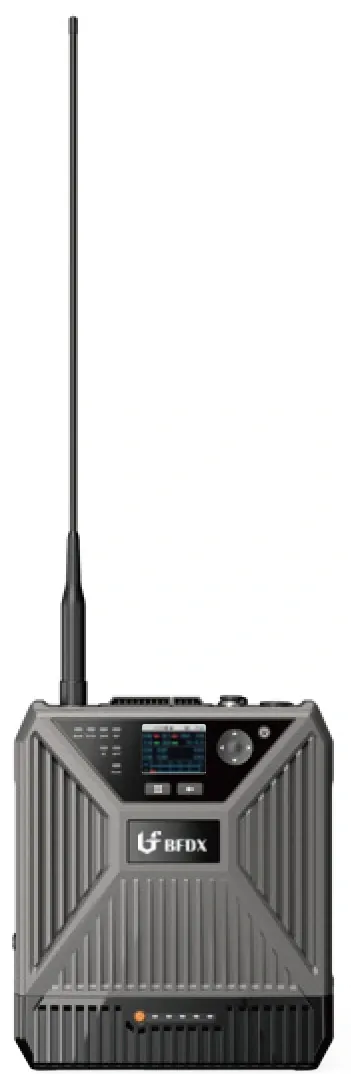
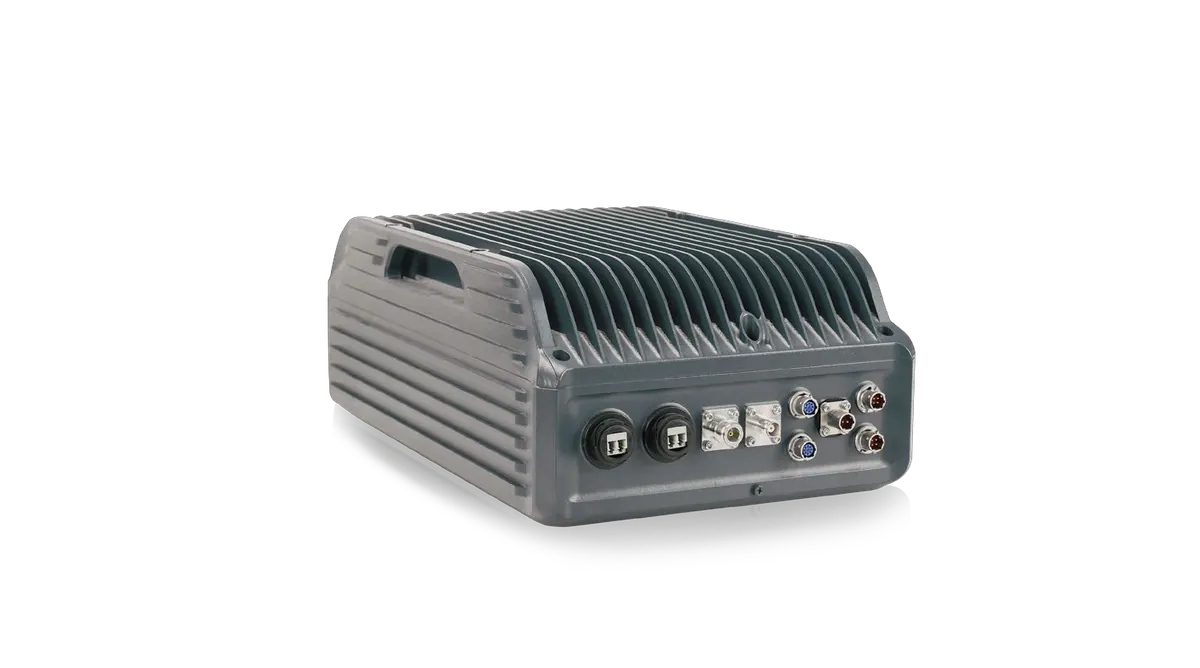
An IP68 portable repeater that repeats on a single frequency point, with AI noise cancellation, advanced voice encryption, IP interconnection, backup power, long operating time, Bluetooth and satellite positioning — deployable on a wall or on a backpack.

Protection
IP68
Repeater mode
Single-frequency point, same-frequency simulcast
Deployment
Wall mount / backpack
Networking
IP interconnection
View details

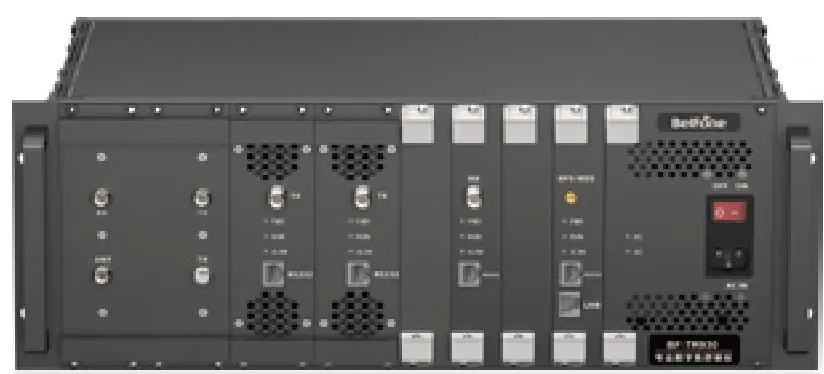
A fixed-installation UHF digital trunking base station in a modular 19-inch 4U chassis. It manages and allocates the radio resources of the site, processes the dispatch services the network runs, and expands to four carriers inside one base station.

Type
UHF fixed digital trunking base station
Structure
19-inch 4U, unit-modular design
Capacity
Expandable to 4 carriers per base station
Core function
Resource management and dispatch services
View details

A professional digital trunking system delivered as a network: rack-mounted channel units at the radio sites, a base station controller running the multi-carrier channel-sharing application, and a B/S dispatch management platform. Deployable from a single-site network up to multi-zone multi-site with digital IP interconnection.

System type
Professional digital trunking system
Composition
Channel units + base station controller + dispatch platform
Dispatch platform
B/S architecture, full IP
Network options
Single-site to multi-zone multi-site
View details

Overview

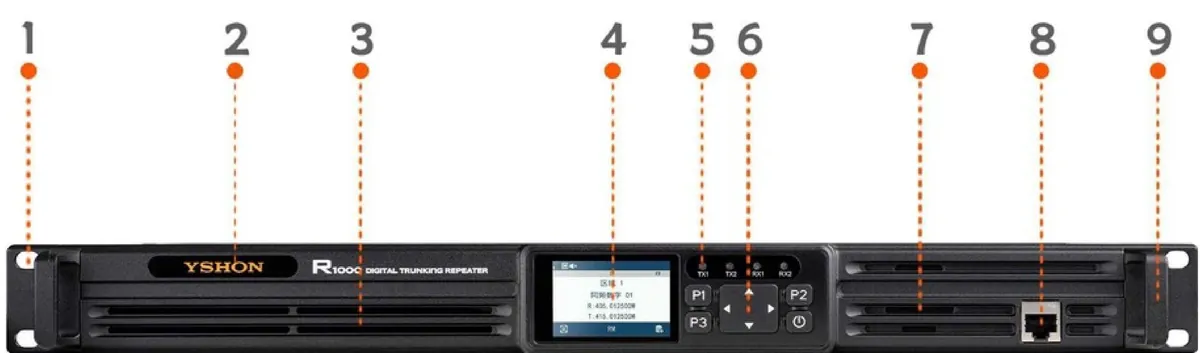
R2000 — R2000 1U Multi-Mode Digital Repeater

A 1U multi-mode repeater that carries PDT, DMR, NXDN and analog traffic on one chassis, with 5-50 W adjustable output and IP interconnection for wide-area voice and data networks.

Typical applications: Multi-floor buildings and campuses needing uniform coverage on one channel · Wide-area networks linked between sites over IP · Sites running analog and digital terminals side by side during migration · Operations that need PoC and smartphone users on the same talk path as narrowband radios · System integrators building coverage where rack space is the constraint · Installations that have to grow carrier by carrier instead of being replaced

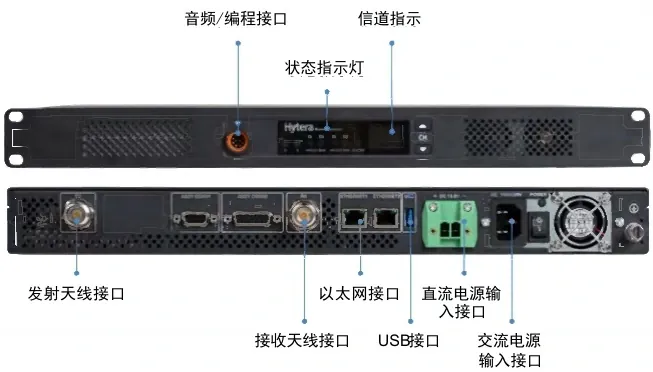
HR1060 — HR1060 PDT Digital Repeater

A 1U PDT digital repeater with the power adapter built in, automatic DC/AC power switching, IP interconnection and integrated routing plus SIP telephony gateway — so dispatch consoles, SIP phones and VoIP applications join the radio network without extra gateway hardware.

Typical applications: Wide-area networks covering several locations with or without wired backhaul · Highway corridors and long transport routes · Environmental monitoring and forest fire prevention networks · Oil extraction fields and energy sites · Temporary emergency deployments that cannot wait for cabled infrastructure · Control rooms running dispatch consoles, SIP phones and VoIP applications

DR600 — DR600 DMR/PDT Digital Repeater

A DMR/PDT compliant professional repeater with digital, analog and mixed modes, adaptive digital/analog forwarding, 64 channels, 45 W VHF and 40 W UHF output, DC or AC power, and open interfaces for third-party dispatch integration.

Typical applications: Professional digital radio systems that have to interoperate with other DMR/PDT terminals · Multi-site networks linked over IP across a district or region · Operations that run their own dispatch or recording platform and need open interfaces · Industrial plants and complexes where adjacent channel interference is a daily reality · Utilities, transport and security networks with a staged analog-to-digital migration · Sites where voice and data services such as short messages and emergency calls have to be forwarded

BF-TR8500 — BF-TR8500 Digital Channel Unit

A cost-effective digital channel unit in a standard 19-inch 2U rack chassis, with 50 W output, a built-in power module, emergency power float charging, active cooling, fault alarms and GPS/BDS positioning for fixed sites and regional coverage.

Typical applications: Fixed sites that need regional coverage beyond handheld range · Cross-zone communication between separate areas of one organisation · Industrial plants and compounds with a control room · Utility, transport and security networks built on a rack-mounted channel layer · Systems that will be expanded channel by channel as traffic grows · Sites reporting to a central dispatch and management platform

BR680 — BR680 Portable Repeater

An IP68 portable repeater that repeats on a single frequency point, with AI noise cancellation, advanced voice encryption, IP interconnection, backup power, long operating time, Bluetooth and satellite positioning — deployable on a wall or on a backpack.

Typical applications: Temporary sites and events that need coverage for a limited period · Emergency and disaster response where infrastructure is not available · Operations in remote or outdoor terrain where a rack installation is impractical · Coverage extension where a fixed repeater cannot be installed · Teams that move between sites with their own repeaters · Field exercises, security details and short-term construction projects

BF-TR930 — BF-TR930 UHF Fixed Digital Trunking Base Station

A fixed-installation UHF digital trunking base station in a modular 19-inch 4U chassis. It manages and allocates the radio resources of the site, processes the dispatch services the network runs, and expands to four carriers inside one base station.

Typical applications: Public safety and emergency communications · Government and enterprise private networks · Police, security and patrol operations · Industry, commerce and industrial campuses · Utilities and infrastructure sites · Command rooms and multi-site organisations

BF-9300/9500 — BF-9300/9500 Professional Digital Trunking System

A professional digital trunking system delivered as a network: rack-mounted channel units at the radio sites, a base station controller running the multi-carrier channel-sharing application, and a B/S dispatch management platform. Deployable from a single-site network up to multi-zone multi-site with digital IP interconnection.

Typical applications: Public safety and emergency communications · Government and enterprise private networks · Police, security and command dispatch operations · Industry, commerce and large campuses · Utilities and infrastructure operations · Multi-site organisations needing zone-wide dispatch
Full specification

Model Frequency range Output power Channel capacity IP Battery
R2000 — 5-50 W, adjustable — — —
HR1060 — Built into the chassis — — —
DR600 136-174 MHz / 400-470 MHz / 350-400 MHz / 450-520 MHz 45 W (VHF) / 40 W (UHF) 64 — —
BF-TR8500 — 50 W — — —
BR680 — Backup power supply supported — IP68 —
BF-TR930 UHF; band version confirmed per market and licence — — — —
BF-9300/9500 — — 19-inch 2U rack-mounted units for fixed installation — —

Key specifications

Model Category Key specifications Features
R2000 Repeaters & systems
  • Modes PDT / DMR / NXDN / Analog
  • Output power 5-50 W
  • Form factor 1U rack
Ultra-thin 1U repeater with PDT / DMR / NXDN / analog modes and 5-50 W output View details →
HR1060 Repeaters & systems
  • Standard PDT digital
  • Form factor 1U, built-in power adapter
  • Power input DC + AC, automatic switching
Ultra-thin 1U PDT repeater with built-in power supply, integrated routing and SIP telephony gateway View details →
DR600 Repeaters & systems
  • Standard DMR / PDT
  • Output power 45 W (VHF) / 40 W (UHF)
  • Channel capacity 64
Standard DMR/PDT repeater with TDMA two-slot operation, 45 W VHF / 40 W UHF output and optional IP interconnection View details →
BF-TR8500 Repeaters & systems
  • Mounting 19-inch 2U rack
  • Output power 50 W
  • Power Built-in module, emergency float charge
19-inch 2U digital channel unit with 50 W output, built-in power and GPS/BDS positioning View details →
BR680 Repeaters & systems
  • Protection IP68
  • Repeater mode Single-frequency point, same-frequency simulcast
  • Deployment Wall mount / backpack
IP68 portable repeater with single-frequency repeating, AI noise cancellation and Bluetooth View details →
BF-TR930 Repeaters & systems
  • Type UHF fixed digital trunking base station
  • Structure 19-inch 4U, unit-modular design
  • Capacity Expandable to 4 carriers per base station
Fixed UHF trunking base station — modular units, 19-inch 4U chassis, expansion to 4 carriers View details →
BF-9300/9500 Repeaters & systems
  • System type Professional digital trunking system
  • Composition Channel units + base station controller + dispatch platform
  • Dispatch platform B/S architecture, full IP
Channel units, base station controller and B/S dispatch platform for single-site to multi-zone trunking networks View details →

Frequently asked questions

Which modes should I specify for my fleet?

Tell us which terminals are in use today and which ones are planned. The R2000 covers PDT, DMR, NXDN and analog, so the same repeater can serve a mixed fleet; we confirm the mode set and the matching band version before the order is placed.

Can one repeater cover a whole building?

That depends on building structure, output power, antenna position and the radios in use, not on the repeater alone. As a rule of thumb, lower power covers a floor or a hall well, while higher power plus a well-placed antenna covers more; for deep indoor coverage we normally plan the antenna system first and the repeater second.

Do I need a duplexer and which antenna?

A repeater normally runs either a single antenna through a duplexer or separate transmit and receive antennas with enough vertical separation. Which one you need follows from the transmit and receive frequency split, the antenna gain and the coverage target, so the duplexer and antenna are specified together with the repeater.

How does IP interconnection work in practice?

Repeaters in different locations connect through their IP ports so the sites behave as one network for voice and data. That requires a network path between the sites — wired where available, or a wireless backhaul where cabling is impractical. Whether the path is available on site is the first thing to check.

Do we need a licence to operate it?

In most countries transmitting on a repeater channel requires a licence held by the user, and the repeater itself normally has to be registered in that licence. Licensing is handled locally by the importer or the operator; we provide the technical documentation needed for the application.

What should we decide before ordering?

Four things: the modes and band version for the destination market, the antenna and duplexer plan for the site, the channel and capacity plan, and whether the system needs IP-linked sites or converged communication with PoC and smartphone users. Confirm those and we will configure the rest with you.