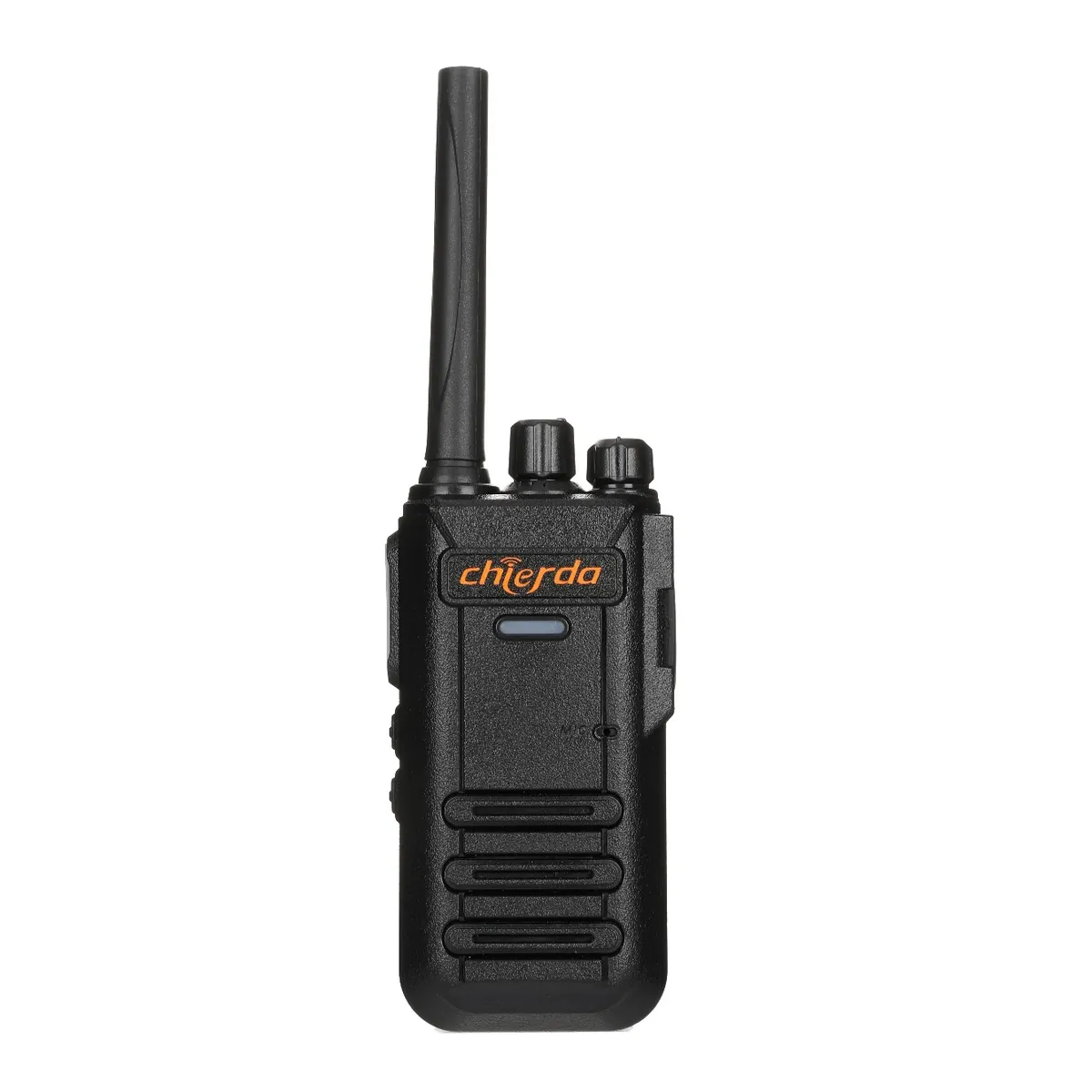
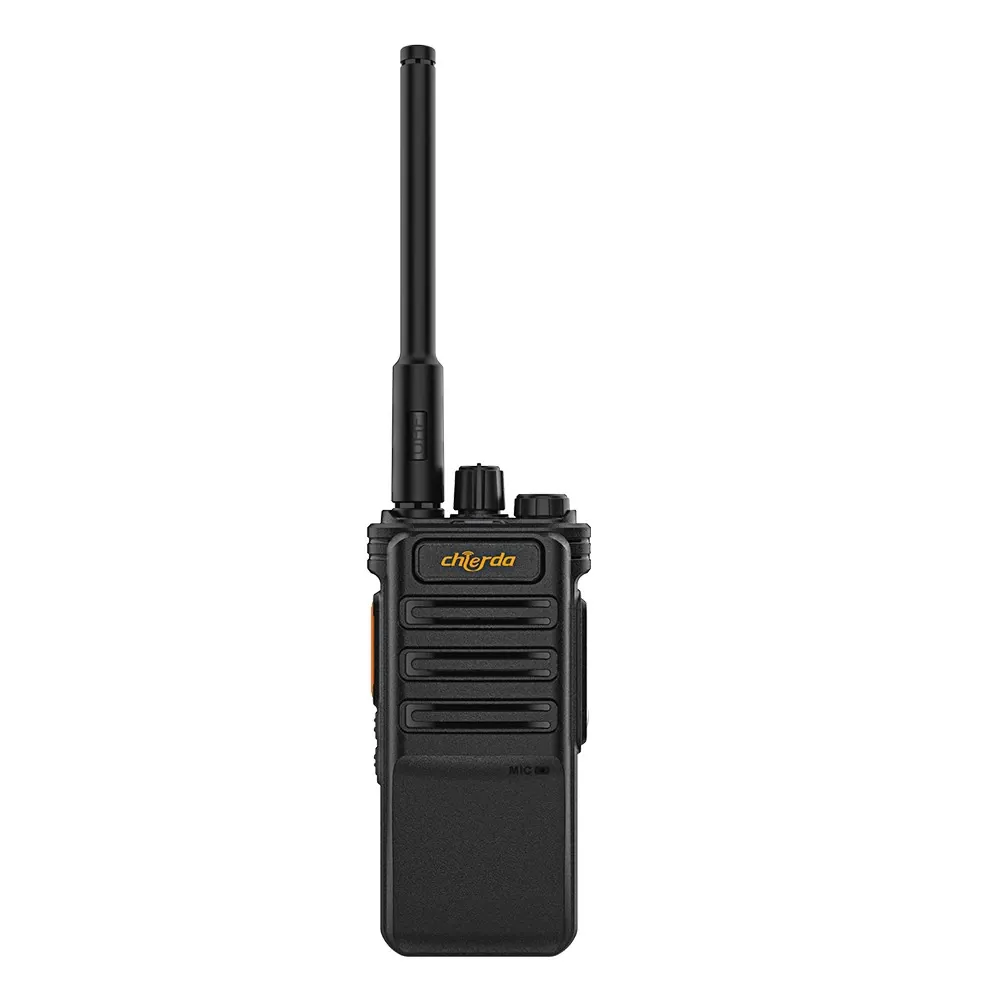
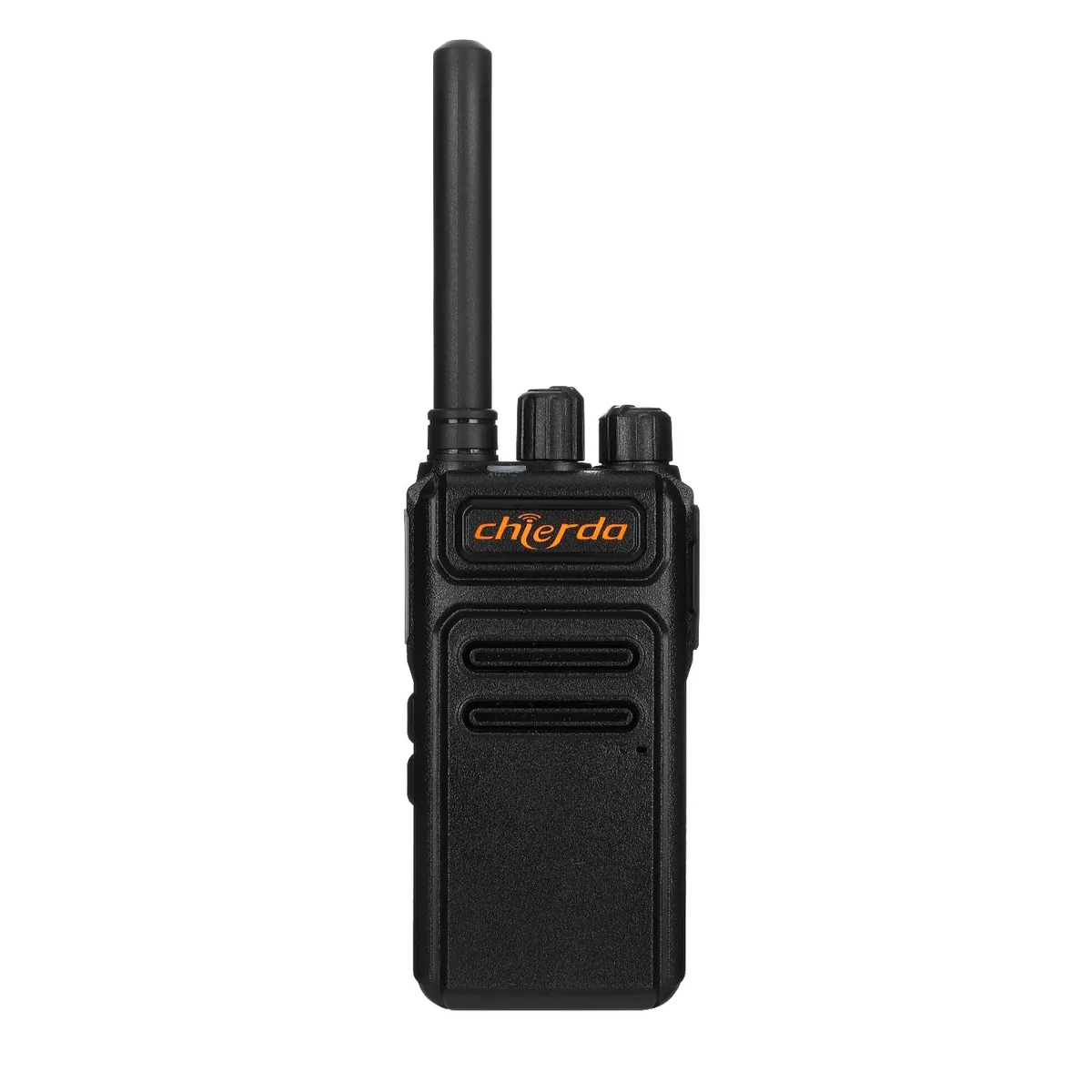
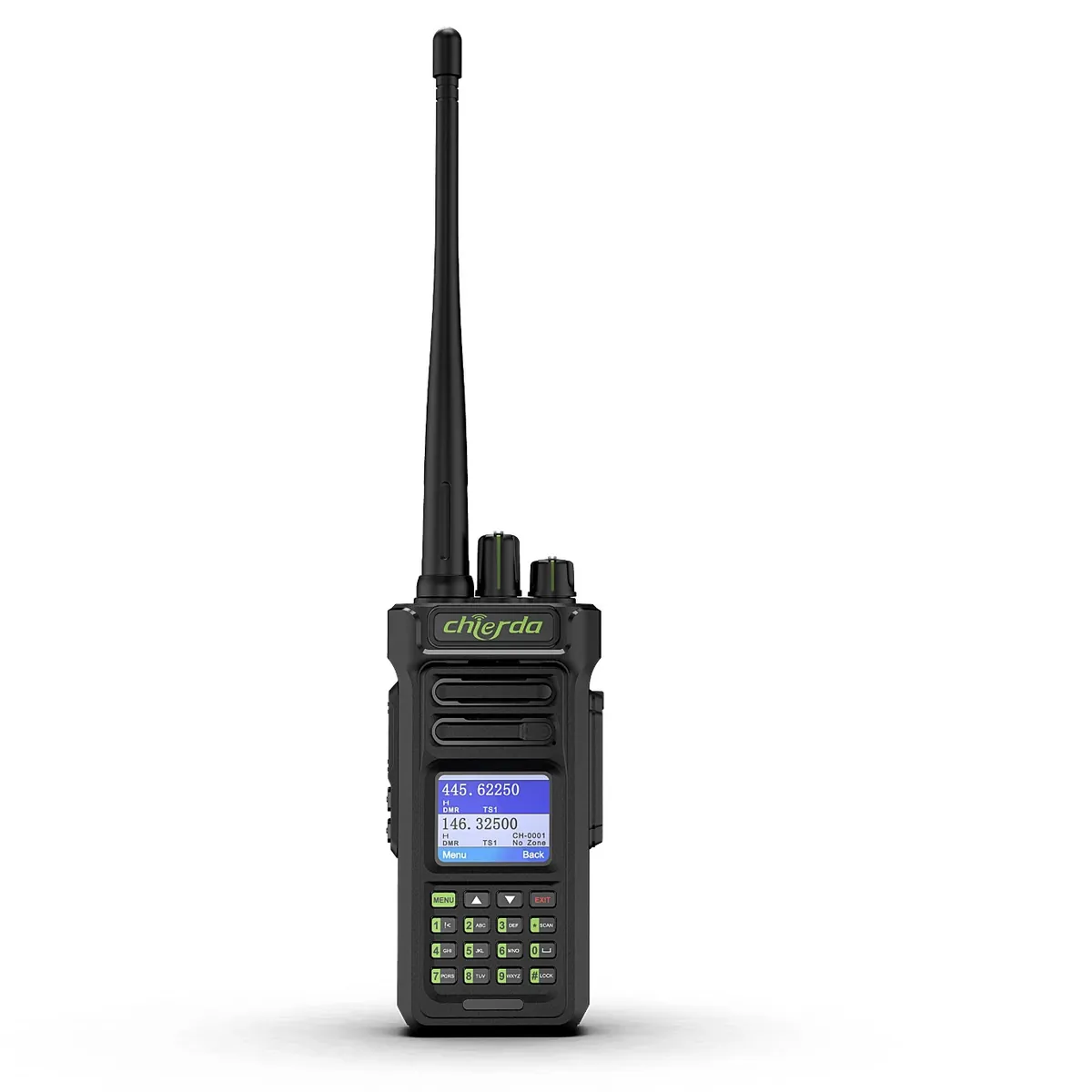
Analog handhelds typically offer 16–128 channels and 2–5 W, with 12–18 hour battery life.
Analog has the lowest hardware cost and no per-user subscription.
It is enough for one to three talk groups on a single site with simple coordination.
A licensed analog system can use a repeater; licence-free PMR446 or FRS cannot.
Analog radio is still the workhorse of small business communication. It is simple, cheap, robust and works when the signal is weak enough that a digital radio would already have dropped out. For a small hotel, a shop, a construction crew or a single-site team, it is often the right answer.
The limits are capacity and features: one conversation per frequency, no radio IDs, no real encryption and limited dispatch. This page explains when analog is enough and when it is time to move to DMR.
Analog configurations by use case
Use case
Typical radios
Key features
Infrastructure
Example scale
Small hotel / guesthouse
Compact analog handheld
Earpiece, 16 channels, long battery
Direct mode or one repeater
8–20 radios
Retail / restaurant
Compact analog handheld
Discreet audio, simple channel list
Direct mode
4–12 radios
Construction crew
Rugged analog handheld
IP67, loud audio, gloved PTT
Portable repeater
10–40 radios
Warehouse
Analog handheld + vehicle radio
IP54+, long battery
One repeater
10–30 radios
Event
Analog handheld
Simple groups, earpiece
Direct mode or rental repeater
20–100 radios
What to look for in an analog radio
Specification
Typical analog range
Why it matters
Channels
16–128
Enough for a small team and a few groups
Power
2–5 W handheld; 25–50 W mobile
Site coverage with a licensed repeater
Protection
IP54–IP67
Dust and water resistance by environment
Battery
12–18 h, often AA-capable
Full shift and emergency backup
Audio
Loud speaker, CTCSS/DCS
Simple group separation, not encryption
Accessories
Earpiece, speaker mic, charger
Matches the role and the shift
Analog vs DMR vs licence-free
Dimension
Licence-free
Analog (licensed)
DMR (licensed)
Repeater
Generally not permitted
Yes
Yes, two slots
Talk groups
Shared channels
One per frequency
Two per 12.5 kHz
Encryption
None
Voice inversion only
Basic / AES256
Cost
Lowest
Low
Medium
Best fit
Small guesthouse, short events
Simple single-site teams
Multi-department sites
When is analog enough?
Analog is enough when the team is small, the site is a single building or open area, and the requirement is simple coordination between one to three groups. It is also a good choice when the budget is tight and the radio is a convenience rather than critical infrastructure.
Analog becomes a problem when several departments need separate groups, when guest or commercial information must be private, or when the site needs recording and dispatch.
Does an analog radio need a licence?
An analog handheld on a licence-free service such as PMR446 or FRS may not need an individual licence, but it cannot use a repeater. An analog system with a repeater, fixed antenna or higher power needs a business licence and a frequency assignment.
The licence belongs to the operator and the site. Confirm the band and type approval for the destination country before ordering.
What range can analog radios achieve?
The same physics apply as any radio: antenna height, obstructions, power and noise. Handheld-to-handheld outdoors is typically 1–3 km; indoors, one floor or one corridor. A repeater on a high antenna extends the site coverage, but the handheld-to-repeater path is the limit.
Analog degrades gradually as the signal weakens, while digital drops abruptly. That can make analog feel more forgiving at the edge, but it does not change the underlying coverage.
When should we migrate from analog to DMR?
Move to DMR when the number of talk groups grows beyond the available frequencies, when privacy or recording becomes a requirement, or when the site needs dispatch and alarm integration. A growing hotel or warehouse usually reaches this point before the radio hardware wears out.
Migration can be phased: keep analog channels for legacy users and move one department at a time to DMR. Mixed-mode repeaters and terminals make the transition practical.
What accessories does an analog system need?
The accessory plan is the same as any radio system: earpieces for guest-facing and quiet areas, speaker microphones for noisy sites, vehicle kits for mobile radios and multi-unit chargers for shift work.
For analog, the programming is simpler: channels and CTCSS/DCS tones. Keep a master channel list so a replacement radio can be cloned quickly.
How much does an analog system cost?
Analog has the lowest hardware cost and no per-user subscription. The main costs are radios, accessories, a repeater if needed, installation and the licence. For a small site, the total can be a fraction of a DMR system.
Compare the five-year total, including replacement batteries and repairs. A cheap radio that fails after two years is not cheaper than a better one that lasts five.
Analog licensing and deployment notes
A licensed analog system needs an operator licence and type-approved equipment. A licence-free analog handheld must stay within the power, antenna and channel limits of its service.
Confirm whether the site needs a licence or can use a licence-free service.
Match the radio band version to the granted frequencies.
Do not add a repeater or external antenna to a licence-free handheld.
Keep a master channel list and CTCSS/DCS plan.
Plan batteries and chargers for the shift pattern.
Project evidence
Multi-Building Industrial Park Network
A multi-building industrial site with linked repeaters and a shared talk-group plan, extended building by building.
Teams move between buildings without changing channel; the control room can reach any area; the plan extends as the site grows.
Client name withheld; the figures describe the delivered configuration.
No. Analog remains the lowest-cost, simplest option for small teams and single sites. It is still widely used in hospitality, retail, construction and events.
Do analog radios need a licence?
A licence-free PMR446 or FRS handheld may not need an individual licence. An analog system with a repeater or higher power needs a business licence and a frequency assignment.
Can analog radios use a repeater?
A licensed analog system can use a repeater with a duplex frequency pair. A licence-free handheld cannot legally use a repeater in most countries.
Is analog more reliable than digital at long range?
Analog degrades gradually, so a weak signal may still be partly readable. Digital drops abruptly below a threshold. Neither changes the underlying coverage; a better antenna or repeater does.
Can we migrate to DMR later?
Yes. Most DMR radios and repeaters support analog mode, so the old fleet can stay on air while departments move to digital channel by channel.
What is CTCSS/DCS?
Sub-audible tones used to separate users on the same channel. They reduce annoyance but are not encryption; anyone on the channel can still hear the conversation.
How many channels do we need?
For a small team, 16 channels is usually enough. Plan spare channels for growth and separate channels for departments or sites.
Get a project quotation
Send the site size, number of users and talk groups. Our engineers reply within one working day with a workable configuration.