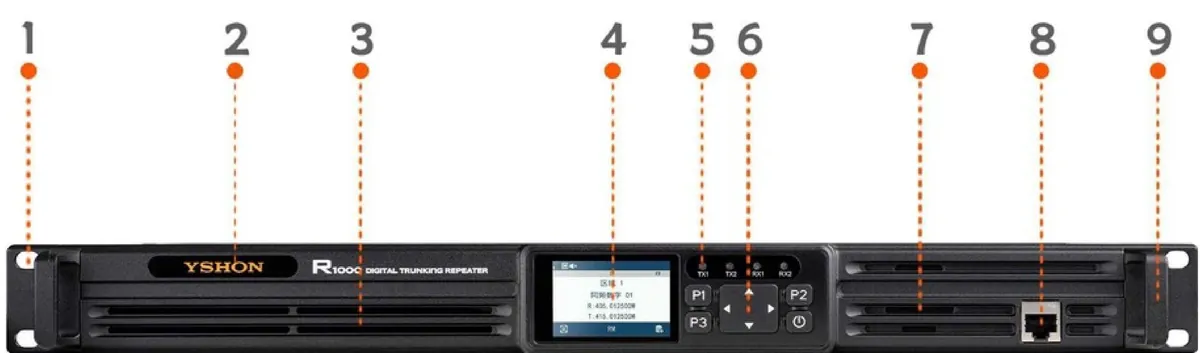
A district network typically uses 3–5 linked repeaters, 30–100 radios and 5–8 talk groups.
Encrypted DMR with AES256/ARC4, dispatch recording and GPS position reporting.
IP68 handhelds with 12–18 hour batteries and emergency alarm for patrol work.
A licence, type-approved equipment and a site survey are required before go-live.
Public safety radio is the link between the officer on the street and the dispatcher who decides where the next unit goes. It has to work across the district, survive a full shift and keep sensitive traffic private.
The design is not a box of handhelds. It is a coverage plan, a talk-group structure, an encryption and key-management process, and a dispatch position that can see and record the traffic.
Public safety configuration by role
Role / unit
Typical users
Radio & accessory
Talk group
Example quantity
Patrol
20–60
IP68 DMR handheld + remote mic
Patrol / zone
60
Traffic
5–15
DMR handheld + earpiece
Traffic
15
Tactical / response
10–30
Encrypted DMR handheld + surveillance kit
Tactical
30
Command
2–6
DMR handheld + vehicle radio
Command
6
Control room
2–4
Base station + dispatch console
All call / emergency
2
Example for a mid-size district. Add 10–20% spares and vehicle kits for mobile units.
Public safety radio specification
Item
Typical specification
Why it matters
Encryption
AES256 / ARC4, key management
Protects sensitive operations and investigations
Positioning
GPS/BeiDou, map display
Control room sees where units are
Protection
IP68, 1.5–2 m drop
Rain, impacts and vehicle use
Battery
12–18 h, fast charge
Covers a full shift and overtime
Channels
256–1024
Zones, talk groups and mutual aid
Dispatch
Voice, recording, alarm, unit status
One console for the whole incident
Analog vs DMR vs PoC for public safety
Dimension
Analog
DMR
PoC
Encryption
Voice inversion only
AES256 / ARC4
Platform-dependent
Coverage
Site + repeater
District + linked repeaters
Mobile network
Recording
Third-party
Integrated dispatch
Platform
Resilience
High
High with site backup
Depends on mobile network
Best fit
Small local teams
District / multi-site operations
Remote or cross-region units
How do you plan coverage across a district?
Coverage is planned district by district. Repeaters are installed at rooftop or hilltop sites and linked over IP, so a unit can drive from one coverage area into the next without touching the radio. Vehicle-mounted radios fill the gaps between sites, and direct mode covers areas with no infrastructure.
The design has to include the places where incidents actually happen: basements, tunnels, car parks, large buildings and rural roads. A district map with signal strength on the main routes is not enough; the control room needs to know where the handheld will fail.
How many talk groups does a public safety team need?
Plan 5–8 groups for a mid-size district: patrol by zone, traffic, tactical, command, medical/fire liaison and an emergency group that overrides normal traffic. Each group should have a clear owner and a documented purpose.
A dispatcher needs to reach a single unit, a group or the whole network. Temporary groups for joint operations should be easy to create and dissolve, and the emergency group should be reserved for emergencies only.
What encryption does public safety need?
Voice and data should be protected with AES256 or ARC4, and the system needs a documented key-management process: who issues keys, how often they rotate, and how they are revoked when a unit leaves or a radio is lost.
Encryption is only as strong as the key process. A lost radio with an active key is a security incident, not just a missing asset. The control room should be able to stun the terminal and the key should be rotated if needed.
How do dispatch and recording work?
The dispatch platform should provide voice dispatch, unit status, map display, emergency alarm routing and recording. Each recording should be stored with the radio identity and time, so it can be found by unit or by period after an incident.
Recording retention and access are policy decisions. Define who may listen, how long recordings are kept and how a request is authorised. A recording that cannot be retrieved under policy is not evidence.
How do you handle legacy analog fleets?
Most DMR repeaters and terminals support analog mode, so the old fleet can stay on air while units move to digital. Digital and analog calls do not cross over by themselves; the migration is planned channel by channel.
Keep a channel plan that shows which units are analog, which are digital and when each switches. A mixed fleet without a plan is two systems sharing a district.
What terminals and accessories fit patrol work?
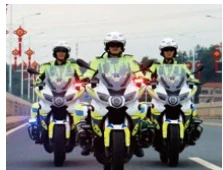
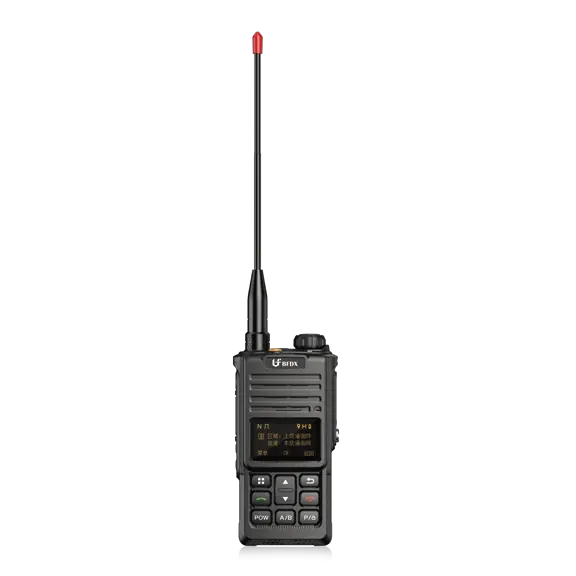
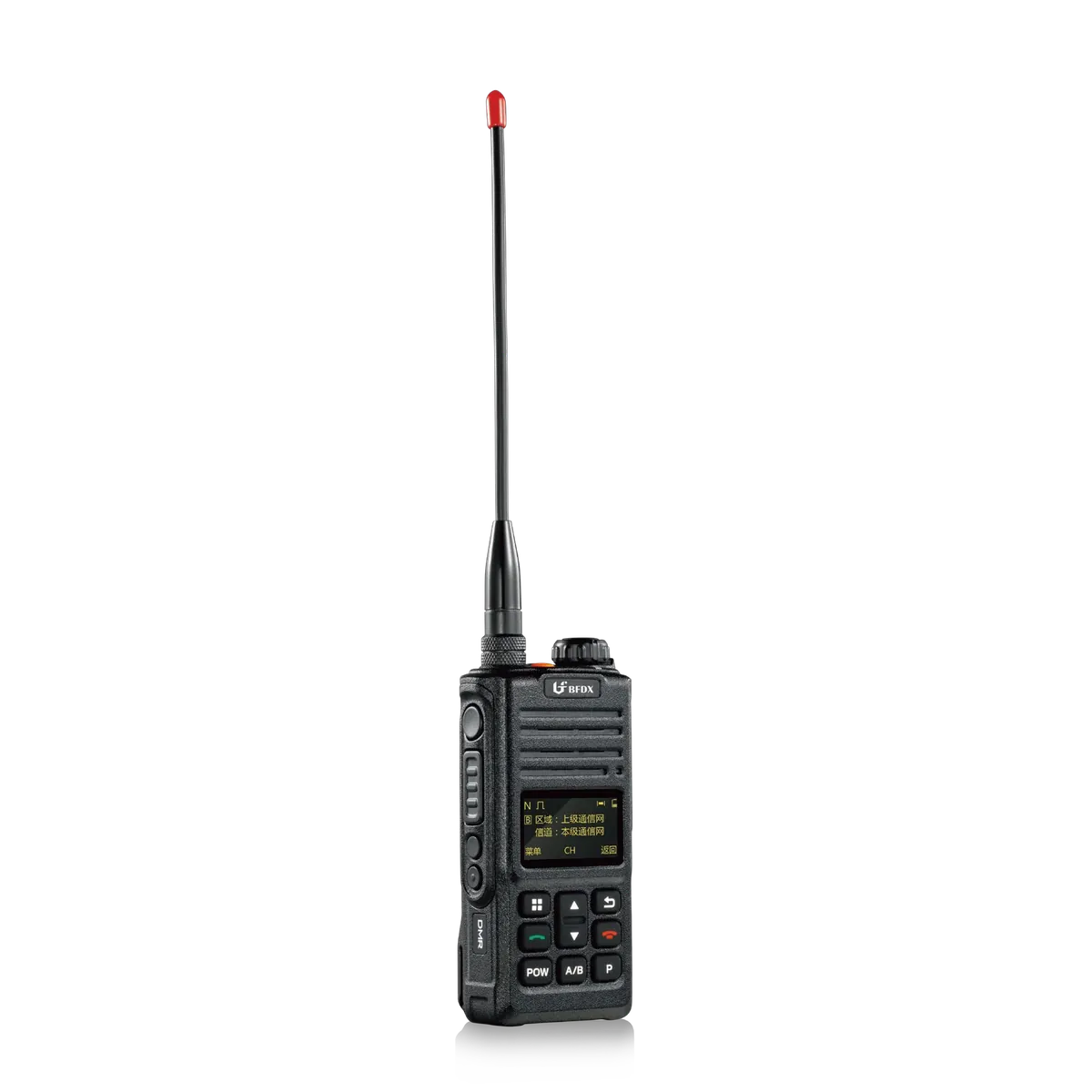
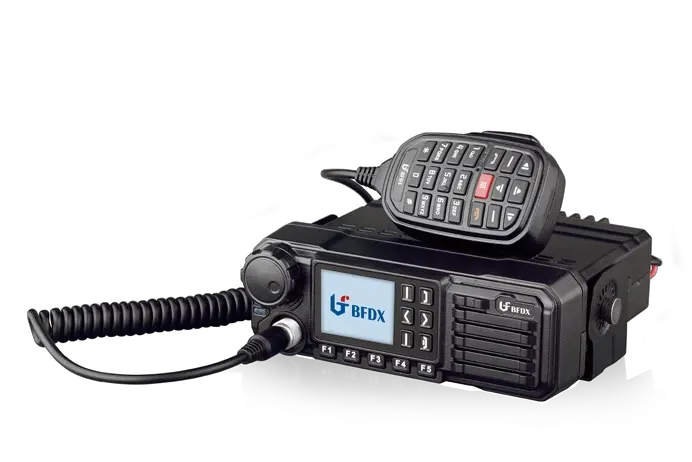
Patrol handhelds need IP68, a loud speaker, a remote speaker microphone and a battery that lasts the shift. A vehicle kit with an external antenna extends coverage and keeps the radio charged between calls.
Tactical units may need a surveillance earpiece and a covert PTT. The accessory set should be decided by role, not by one standard kit for everyone.
Public safety compliance and deployment notes
Public safety systems need an operator licence, type-approved equipment and a documented encryption and recording policy. Confirm the band, power and approval for the jurisdiction before ordering.
Confirm the licence covers every repeater and site.
Document key management and encryption rules.
Define recording retention and access.
Test coverage on the routes and buildings that matter.
Plan a fallback for sites and network links.
Project evidence
Emergency Command and Rapid-Deployment Network
A deployable radio network with portable repeaters, direct-mode fallback and a shared command group for multi-agency response.
Coverage is raised at the incident, agencies share a command group, and teams inside structures keep talking when the repeater link drops.
Client name withheld; the figures describe the delivered configuration.
How many radios does a public safety district need?
A mid-size district typically needs 30–100 radios across patrol, traffic, tactical, command and the control room, plus 10–20% spares.
Do public safety radios need encryption?
Sensitive operations and investigations require encryption. AES256 or ARC4 should be paired with a documented key-management process.
How do you cover a whole district?
Use IP-linked repeaters at high sites, vehicle radios for the gaps and direct mode where there is no infrastructure. Test the routes and buildings that matter.
Can the system record every call?
The dispatch platform can record nominated talk groups and store them with radio identity and time. Retention and access are policy decisions.
Can new DMR radios work with the old analog fleet?
Most DMR terminals and repeaters support analog mode, so the old fleet can stay on air while units migrate channel by channel.
What happens if a radio is lost?
The control room can stun the terminal so it cannot transmit or receive. If the radio had an active key, rotate the key according to policy.
How long does a district deployment take?
A single-site system can be commissioned in weeks. A district with multiple repeater sites, dispatch integration and a coverage test can take several months.
Get a project quotation
Send the site size, number of users and talk groups. Our engineers reply within one working day with a workable configuration.